- Urban Planning
- Strategies
- Geomatics and Cartography
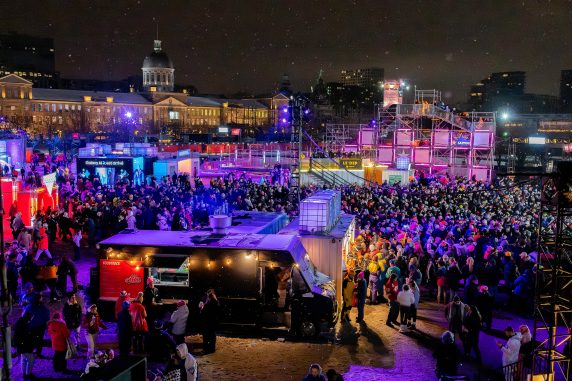
Montréal after dark: a strategic framework where a thriving night economy and quality of life aren’t at odds.
Sustainable actions
Health and well-being

- Identifying solutions to bring together complementary uses that are sometimes seen as incompatible (bars, concert venues vs. residences)
Justice, equity, diversity and inclusiveness

- Mixing uses and demographic profiles to avoid an unfair concentration of nuisances
- Supporting non-traditional forms of employment (night work, cultural and creative sectors), fostering the inclusion of workers on non-standard schedules.
Reduced environmental footprint

- Optimizing existing infrastructure (transit, buildings, services)
Resilience and adaptation to climate change

- Supporting a compact, flexible urban development model that lets uses adapt over time (day/night).
- Strengthening urban economic resilience through diversified functions and activity periods.
- Decentralizing nighttime cultural activity hubs and reducing car dependency between destinations and residents’ homes
Economic vitality

- Economic growth: stimulating the local economy through the development of 24-hour cultural, commercial, and nightlife hubs.
- Culture and tourism: increasing Montreal’s appeal for residents, visitors, and investors, particularly in nighttime tourism.
- Supporting creative industries and local businesses through a regulatory framework better suited to nighttime activities.
- Creating jobs and diversifying the economic fabric, strengthening Montreal’s competitiveness nationally and internationally.
Night holds economic and cultural potential that few cities have learned to activate fully. Planned well, it creates jobs, supports creative industries, draws visitors, and strengthens a city’s identity. In Montréal, the question was concrete: how do you capture that potential without hurting the quality of life in the surrounding residential neighbourhoods?
We supported the City of Montréal in identifying 24-hour economic activity zones as part of its nighttime economic policy. The approach combined urban planning expertise, advanced geomatics analysis, and an international comparative review to produce an action framework grounded in Montréal’s realities.
First, an international comparative review. Six night-zone initiatives from around the world were studied in depth, with interviews with stakeholders from globally recognized cities, including the night mayors of London and New Orleans. These case studies identified success factors, viable economic models, and proven strategies for balancing nightlife, cultural, and residential uses, particularly around noise and transit access.
Next, a custom-built geomatics analysis tool. Developed from land-use data, demographic profiles, nearby sensitive activities, and proximity to transit infrastructure, this tool visualizes, maps, and evaluates high-potential nighttime sites across the city. The analysis relies on a rigorous econometric model to assess each zone against objective criteria, an approach that goes beyond traditional site-identification methods.
Finally, a site-by-site regulatory diagnosis. For each zone identified, we assessed how compatible nighttime activities were with current borough bylaws and made concrete recommendations for adapting the regulatory framework.
The final report delivered to the City provides a solid tool for planning nighttime activity coherently: growing the local economy, supporting creative industries and non-traditional jobs, strengthening mixed-use development, and limiting nuisances for neighbouring communities. With this innovative strategic framework for identifying its 24-hour zones, Montréal reinforces its position as an open, competitive cultural metropolis on the international stage.
Data sheet
- Client
- City of Montréal
- Location
- City of Montréal
Expertise
- Urban Planning
- Strategies
- Geomatics and Cartography
Services provided
- Planning and regulation
- Strategic planning
- Economic development