- Urban Planning
- Urban Design
- Public Participation
- Geomatics and Cartography
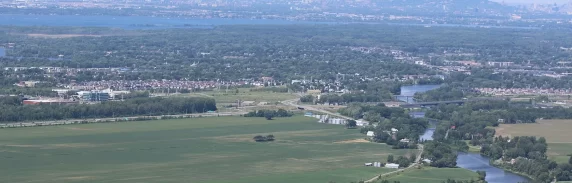
A regional county municipality better equipped to plan its growth, support densification and strengthen territorial governance.
Sustainable actions
Health and well-being

- Active and collective travel
- Improved quality of living environments through safe, welcoming neighbourhoods suited to the population’s needs
- Access to health care, social services and key territorial infrastructure
Justice, equity, diversity and inclusiveness

- Densification and development of complete, inclusive and resilient living environments
- Creation of diverse, mixed and accessible living environments
- Consideration of the equitable distribution of social and affordable housing across the territory
- Strengthened social cohesion and sense of belonging
Greening and biodiversity

- Protection and enhancement of wooded and natural areas
- Development of biodiversity corridors
- Increased green space and tree canopy in built-up areas and their surroundings
- Renaturalization of urban, agricultural and peri-urban areas
Reduced environmental footprint

- Climate action
- Preservation of natural environments
- Containing urban sprawl through strategic densification
- Sustainable infrastructure modernization
Resilience and adaptation to climate change

- Heat islands
- Sustainable stormwater management
- Strengthened environmental resilience
- Management of natural and human-made constraints
- Infrastructure and facilities adapted to climate change
- Contribution of natural areas and greening to climate resilience
Economic vitality

- Consolidation and optimization of employment hubs
- Development of an innovative, circular regional economy
- Improved access to employment hubs through sustainable transportation
- Development and revitalization of local businesses
- Protection and enhancement of agricultural land
Population growth is reshaping the Roussillon MRC. To turn that growth into an asset rather than a strain, the MRC revised its land use and development plan, the central tool guiding how its eleven municipalities organize their territory for the 2026–2046 horizon.
The process brought elected officials and technical teams together around a shared vision, translated into strategic directions, a spatial organization concept, a land-use plan and a renewed regulatory framework. It addresses three defining challenges: the housing crisis, evolving provincial land use planning directions, and the need to ensure living environments that are accessible and financially viable.
On housing, the plan steers development toward more compact urban forms with better services and connections. Densifying already built-up areas supports complete living environments, where daily services, local businesses and active transportation networks are within easy reach. The territory strengthens access to housing while improving the quality of life for the communities that settle there.
On the economic front, the revised plan gives municipalities and their partners a clear, predictable framework. It supports coherent infrastructure management, strengthens the financial viability of local communities and reinforces intermunicipal coordination, concrete conditions for the regional economy to grow in a structured, sustainable way.
On the environmental front, the MRC factors climate realities into its planning choices: containing urban sprawl, protecting natural environments, and promoting active and collective transportation. The plan strengthens the territory’s resilience to climate change and protects the resources that sustain long-term quality of life.
With this plan, the Roussillon MRC gains a genuine territorial project, grounded in its communities’ real needs and driving coherent development across the three dimensions that matter.
Data sheet
- Client
- Roussillon MRC
- Location
- Roussillon MRC
Expertise
- Urban Planning
- Urban Design
- Public Participation
- Geomatics and Cartography
Services provided
- Sustainable Development
- Planning and regulation
- Strategic planning